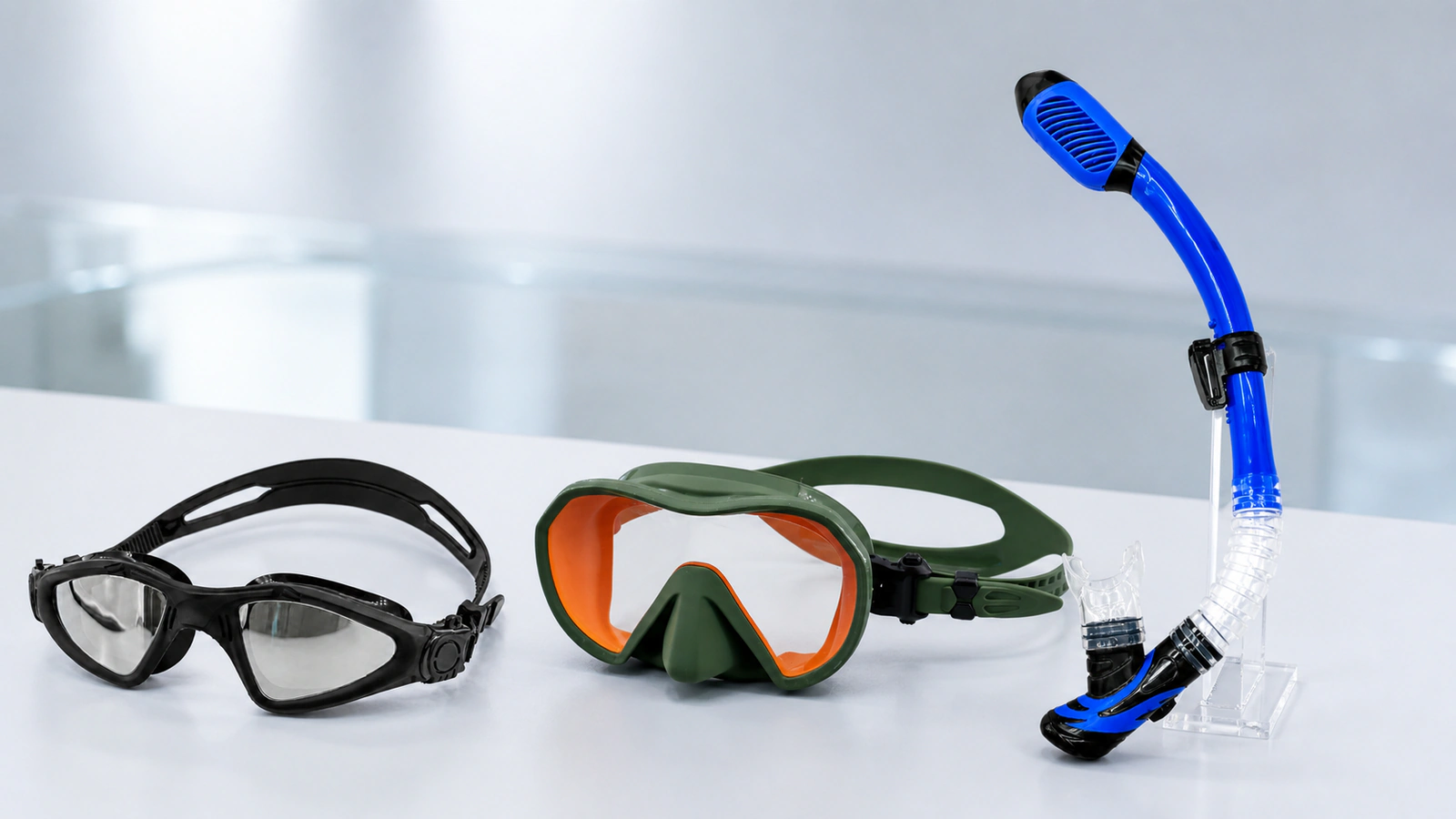
Liquid silicone rubber, commonly called LSR, is a two-part silicone material used in processes such as liquid injection moulding. It can be considered when an aquatic-product programme needs a soft-contact component with a defined shape, repeatable geometry and a clear production route.
For buyers, LSR should not be treated as an automatic upgrade or as a substitute for every silicone part. The correct choice depends on the product, the intended user, the target market, the mating components and the validation plan.
Where LSR may fit in aquatic gear
In swim goggles, LSR may be considered for components such as the face seal, gasket, eye-cup sealing area or selected head-strap parts. The design objective is not simply softness. The seal geometry, strap adjustment, frame stiffness, facial-fit range and assembly method all affect the final wearing experience.
For diving masks, the skirt and facial sealing area are especially important. The current BS EN 16805 standard covers areas including the face seal, head strap and attachment, water tightness and practical performance. Material selection is only one part of that product-level evaluation.
For snorkels, LSR may be considered for a mouthpiece or selected flexible components. However, a softer mouthpiece alone does not establish a safe snorkel design. BS EN 1972 covers snorkel safety requirements and test methods, including areas such as airflow, joints, marking and manufacturer information.
LSR can also be considered for some swim-cap concepts, where applicable. Final suitability still depends on the cap design, surface finish, intended user and the chosen material system.
Combining soft LSR with rigid components
Aquatic products often combine a soft sealing or contact part with rigid components. A swim goggle may combine a soft seal with a rigid lens or frame; a diving mask may combine a flexible skirt with a lens-retaining structure; a snorkel may combine a soft mouthpiece with a rigid tube or valve housing.
Where a programme uses LSR alongside polycarbonate, PVC or another rigid component, the joint strategy should be decided early. Depending on the design, this may involve mechanical retention, assembly after moulding, insert moulding or a material-specific overmoulding route.
Some LSR grades are developed for adhesion to selected engineering plastics in integrated moulding processes. That does not mean every silicone grade will bond to every rigid material. Grade selection, surface condition, geometry, tooling and the intended use all need separate confirmation before a bonding claim is made.
Design, colour and tooling coordination
LSR can support intricate component geometry, repeatable moulded shapes and colour-system planning. The actual result depends on the selected grade, pigment system, part design, mould concept and production controls.
For an OEM programme, the material discussion should begin before tooling is released. A useful design review should identify:
- the soft-contact zones and their function;
- the rigid components they connect to;
- the intended assembly or bonding route;
- colour, appearance and surface-finish expectations;
- the product-specific validation plan;
- the approval points from concept, tooling and T1 samples through mass production.
This approach helps buyers avoid treating a hand-feel sample as the final material decision.
A buyer’s LSR selection checklist
Before confirming LSR for an aquatic-product programme, buyers should ask:
- What user, activity and market is the product designed for?
- Which components require sealing, flexibility, retention or soft facial contact?
- Which rigid parts must interface with the LSR component?
- What material documentation and supplier information are required for the target market?
- Which functional checks are appropriate for the product, such as fit, sealing, strap retention, water tightness, airflow or assembly durability?
- What colour, surface and visual standards must be approved?
- Which samples and records must be reviewed before tooling release and before bulk production?
ALLWELL can design, develop tooling and ultimately produce aquatic gear according to customer requirements and concepts. Material choice, component integration and validation should be confirmed for each product programme before final production approval.
This article provides general technical information only. It does not establish medical-grade, food-grade, hypoallergenic, non-toxic, UV-resistance, yellowing-resistance or legal-compliance status for any material or product. Such conclusions depend on the final formulation, design, process, test programme and target market.